

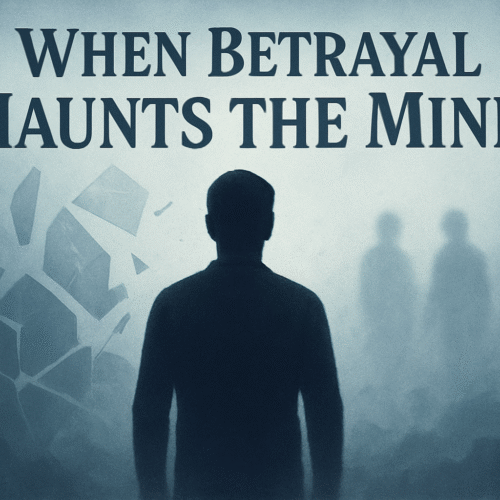
“He had a dream today, but it was very foggy. He saw his ex-wife, who betrayed him, with his cousin brother and started having sexual affairs with him. And eventually left him and married another man without his consent. She ran away with his three children. He saw her at the edge of a wall, worrying and wanting to do a strange thing to herself, but he couldn’t recollect what she intended to do. However, he kept on telling her to stop, that it is not good to injure herself, and if he goes to another part of the house, he will still see her doing the same thing. In fact, he can’t fully understand the dream until he wakes up.”
1. The Foggy Atmosphere — Emotional Overload & Unresolved Trauma
Fog in dreams almost always represents confusion, emotional overload, or a lack of clarity. It suggests that the dreamer is navigating a situation where truth, motives, and outcomes are obscured.
From a psychological lens, fog is the mind’s way of admitting, “This is too much to process consciously.”
Given his history with betrayal, that fog symbolizes:
- unresolved emotional wounds
- difficulty making sense of past events
- a subconscious attempt to revisit a story that still feels unfinished
As a writer, you’ll appreciate how the mind uses atmosphere to set emotional tone; here, it sets the tone of internal disorientation.
2. Seeing the Ex‑Wife With the Cousin — Betrayal Trauma Amplified
Dreams often dramatize emotional wounds. His ex‑wife’s betrayal is replayed in an exaggerated form—not just infidelity but infidelity with a family member.
This isn’t about literal cousin involvement. This is symbolic of:
- betrayal coming from “inside the circle”
- a feeling that he was surrounded by disloyalty
- the belief that even people close to him could violate his trust
In dream psychology, a cousin represents a part of the family system—so this symbolizes the wound spreading into his sense of belonging and identity.
My opinion: this is a classic trauma‑loop dream, triggered when someone has not fully integrated the emotional reality of a past betrayal.
3. She Leaves With the Children — Fear of Losing What Matters Most
Dreams about someone “taking the children” often represent:
- fear of losing stability
- fear of losing legacy, meaning, or personal identity
- a perceived injustice that remains unhealed
Children in dreams often symbolize a person’s emotional investments or life’s work. Her taking them reflects a deep fear that he lost not only a partner but also parts of himself.
4. She Is at the Edge of a Wall — Crisis, Guilt, and Collapse
A person standing on the “edge” in a dream symbolizes psychological crisis.
This scene likely reflects:
- his perception of her instability
- internalized guilt he may carry for things he had no control over
- or the part of himself that feels pushed to the edge by the whole experience
Walls in dreams often represent boundaries or limits. Seeing her at the edge suggests:
- he has reached the emotional boundary of what he can tolerate
- the memory of her betrayal still presses him to psychological edges
5. She Tries to Harm Herself — Projected Emotion & Moral Struggle
His subconscious places her in a self‑destructive situation because part of him is still processing:
- Why she acted the way she did
- Whether she regrets it
- Whether justice or accountability ever occurred
His repeated attempts to stop her reflect:
- his moral compass
- his internal desire to “fix” chaotic relationships
- his need for closure
- his inability to detach even from harmful people
This is significant:
The dream shows him playing the rescuer in a situation where he was the one emotionally injured.
In my opinion, this is his psyche confronting the part of him that still feels responsible for what happened—even though he wasn’t.
6. He Sees Her Doing the Same Thing Elsewhere — Recurring Trauma Loop
This repetition symbolizes a psychological truth:
The pain resurfaces no matter how far he moves because it wasn’t fully healed.
This is the subconscious replaying the trauma because:
- the emotional circuit is still open
- closure never really came
- forgiveness or detachment hasn’t been completed
- or he suppressed the pain instead of processing it
This is extremely common in those carrying betrayal wounds.
7. “He couldn’t understand the dream until he woke up” — Subconscious Processing in Real Time
When a dream feels fragmented, chaotic, or nonsensical, it’s usually because the mind is actively trying to reorganize emotional memory.
This is essentially the brain doing nighttime “therapy.”
The dream is not meant to make sense — it’s meant to release pressure.
My Final Interpretation (Direct and Professional)
This dream is a symbolic retelling of:
- unresolved betrayal
- loss of trust in intimate relationships
- emotional responsibility he still carries for someone who hurt him
- a fear that painful experiences will repeat even when he tries to move on
- a lingering sense of injustice or unclosed emotional chapters
The dream is not about future events. It’s a psychological detox.
His mind is attempting to separate:
- past events
- emotional meaning
- personal responsibility
- and future identity
This is the psyche cleansing itself of the residue of betrayal.
My Professional Opinion as Requested
It is his psyche trying to finally close a chapter that logic alone could not close.
The emotional weight is surfacing so it can finally be released.



Leave a comment